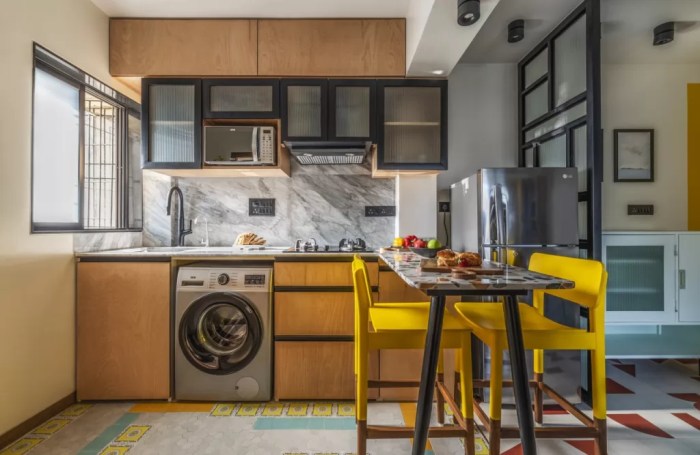
Kitchen layout ideas for small spaces open concept are increasingly popular as homeowners seek to maximize functionality and create inviting living areas. These designs prioritize seamless integration between the kitchen and adjacent rooms, fostering a sense of spaciousness and connectivity. However, successfully navigating the challenges of limited square footage requires careful planning and creative solutions.
This guide explores a comprehensive range of strategies, from optimizing layouts and storage to selecting appropriate materials and lighting, all tailored to the unique demands of small, open concept kitchens. We will delve into practical techniques to transform even the most compact spaces into stylish and efficient culinary hubs, enhancing both your home’s aesthetic and your daily living experience.
Kitchen Layout Ideas for Small Spaces: Open Concept Design: Kitchen Layout Ideas For Small Spaces Open Concept
Open concept kitchens have become incredibly popular, offering a sense of spaciousness and fostering connection within the home. However, designing a small open concept kitchen presents unique challenges. Balancing functionality, aesthetics, and flow requires careful planning. This guide explores various layout options, storage solutions, and design techniques to help you create a beautiful and practical kitchen, even in a limited footprint.
Successfully navigating this design requires understanding the interplay between the kitchen and adjacent living areas. It’s about creating a cohesive space that feels both inviting and efficient. We’ll delve into how to maximize every inch, optimize workflow, and achieve a visually appealing result.
Understanding Small Open Concept Kitchens
A small open concept kitchen is typically defined by its integration with surrounding living spaces – often the dining and living rooms – and its limited square footage. Unlike traditional kitchens, which are enclosed by walls, these kitchens prioritize openness and connectivity. This design choice impacts how the kitchen functions and feels within the overall home.
Common challenges include maintaining a sense of separation between the kitchen and living areas, managing cooking odors and noise, and ensuring sufficient storage and counter space. Achieving a smooth workflow is also crucial, as the kitchen becomes a more visible and integrated part of daily life. Careful consideration must be given to how the space will be used and how to minimize clutter.
Here’s a guide to typical dimensions for small kitchens suitable for open concept layouts:
| Kitchen Size (sq ft) | Length (ft) | Width (ft) | Suitable for (people) |
|---|---|---|---|
| 50-60 | 8-10 | 6-7 | 1-2 |
| 60-80 | 10-12 | 6-8 | 2-3 |
| 80-100 | 10-12 | 8-10 | 3-4 |
Compared to traditional enclosed kitchens, open concept designs often require more attention to organization and visual appeal. Everything is on display, so maintaining a tidy and aesthetically pleasing space is essential. However, the benefits of increased social interaction and a more spacious feel often outweigh these challenges.
Layout Options for Maximizing Space
Choosing the right layout is paramount in a small open concept kitchen. Each layout offers unique advantages and disadvantages, impacting workflow, storage, and overall aesthetic. Careful consideration of your cooking habits and available space is crucial.
- Galley Kitchen: This layout features two parallel countertops, creating a central walkway. It’s highly efficient for cooking, but can feel cramped if the space is too narrow.
- L-Shaped Kitchen: Utilizing two adjacent walls, this layout provides ample counter space and allows for a more open flow. It’s versatile and works well in various space configurations.
- U-Shaped Kitchen: Enclosing the kitchen on three sides, this layout offers maximum counter and storage space. It’s ideal for serious cooks but requires a larger footprint.
- Single-Wall Kitchen: All appliances and cabinets are arranged along a single wall. This is the most space-saving option, but can lack counter space and storage.
- Peninsula Kitchen: Similar to an island, a peninsula extends from a wall, providing additional counter space and storage. It’s a good compromise between an island and a single-wall kitchen.
Here’s a comparative table outlining the space efficiency, cost, and aesthetic appeal of each layout:
| Layout Type | Space Efficiency (1-5) | Estimated Cost (low/medium/high) | Aesthetic Appeal (1-5) |
|---|---|---|---|
| Galley | 4 | Low | 3 |
| L-Shaped | 4 | Medium | 4 |
| U-Shaped | 3 | Medium/High | 4 |
| Single-Wall | 5 | Low | 2 |
| Peninsula | 4 | Medium | 4 |
Visually expanding a small kitchen can be achieved through strategic layout choices. For example, using lighter colors, incorporating open shelving, and maximizing natural light can create a sense of spaciousness. Avoiding bulky appliances and opting for streamlined designs also contributes to a more open feel.
Storage Solutions for Small Open Concept Kitchens
Effective storage is critical in a small kitchen. Beyond standard cabinets, innovative solutions can significantly maximize space and organization. Thinking vertically and utilizing often-overlooked areas are key strategies.
- Pull-Out Shelves: These make accessing items in deep cabinets much easier and prevent wasted space.
- Drawer Dividers: Keep utensils, cookware, and other items neatly organized within drawers.
- Vertical Storage: Utilize wall space with shelving, pot racks, and magnetic knife strips.
- Lazy Susans: Perfect for corner cabinets, allowing easy access to items that would otherwise be difficult to reach.
- Angled Cabinets: Another solution for corner spaces, maximizing storage potential.
Space-saving appliances can also make a big difference:
| Appliance | Size (approx.) | Benefit | Price Range |
|---|---|---|---|
| Compact Refrigerator | 24-30″ wide | Saves space, energy efficient | $500 – $1500 |
| 24″ Dishwasher | 24″ wide | Fits smaller spaces, still provides convenience | $600 – $1200 |
| Induction Cooktop | 24-30″ wide | Space-saving, energy efficient, easy to clean | $800 – $2000 |
If your layout includes an island or peninsula, integrate storage into it. Drawers, cabinets, and even open shelving can be incorporated to provide additional space for cookware, utensils, or pantry items. This maximizes functionality and keeps essential items within easy reach.
Optimizing Workflow in a Compact Kitchen
The “kitchen work triangle” – the relationship between the sink, refrigerator, and cooktop – is a fundamental principle of kitchen design. In a small open concept space, adapting this triangle is crucial for efficient workflow. The goal is to minimize steps and create a smooth flow between these key areas.
Zoning the kitchen into distinct areas – cooking, cleaning, and preparation – is also important. Designate specific areas for each task to streamline the cooking process. For example, keep prep surfaces near the sink and refrigerator, and the cooktop within easy reach of both.
Minimizing clutter is essential. Keep countertops clear of unnecessary items and utilize vertical storage to maximize space. Regularly declutter and organize to maintain a functional workspace. Integrating the kitchen seamlessly with adjacent living areas enhances flow. Consider using consistent flooring and paint colors to create a cohesive look.
Furniture arrangement can also define zones within the open concept space, creating a natural transition between the kitchen and living areas.
Lighting and Visual Design Techniques
Lighting plays a crucial role in making a small kitchen feel larger and more inviting. A well-lit kitchen appears more spacious and functional. Layering different types of lighting is key.
- Ambient Lighting: Provides overall illumination, such as recessed lighting or a ceiling fixture.
- Task Lighting: Focuses light on specific work areas, such as under-cabinet lighting or pendant lights over the island.
- Accent Lighting: Adds visual interest and highlights architectural features, such as spotlights on artwork or shelving.
A suitable color palette for a small kitchen should be light and airy. Whites, creams, and light grays can create a sense of spaciousness. Consider using a pop of color for accents, such as cabinets or accessories. Reflective surfaces, such as glossy backsplashes and countertops, enhance light and create a sense of spaciousness. Mirrors can also be used to visually expand the space.
Island and Peninsula Considerations, Kitchen layout ideas for small spaces open concept
Kitchen islands and peninsulas both offer additional counter space and storage, but they differ in terms of space requirements and functionality. An island is a freestanding unit, requiring more space for circulation, while a peninsula is attached to a wall, making it a good option for smaller kitchens.
Minimum clearances around an island or peninsula should be at least 36 inches, ideally 42-48 inches, for comfortable movement. This allows for easy access and prevents congestion. Multi-functional islands can incorporate seating, storage, and prep space, maximizing their utility. For example, an island can feature drawers, cabinets, a built-in microwave, and a breakfast bar.
Choosing the right countertop material for an island or peninsula is important. Consider durability, aesthetics, and maintenance. Quartz, granite, and solid surface materials are popular choices, offering a balance of these qualities.
Material Selection for Small Spaces
Selecting durable and visually appealing materials is essential for a small kitchen. Countertops, cabinets, flooring, and backsplashes all contribute to the overall aesthetic and functionality of the space.
- Countertops: Quartz, granite, and solid surface materials are durable, easy to clean, and available in a wide range of colors and patterns.
- Cabinets: Opt for materials that maximize storage and withstand daily use, such as solid wood, plywood, or MDF with a durable finish.
- Flooring: Choose flooring that complements the open concept design and creates a cohesive look. Options include hardwood, tile, laminate, and vinyl.
- Backsplashes: Add personality and protect walls with materials like tile, glass, or stainless steel.
Here’s a table outlining some backsplash material options:
| Material | Cost (per sq ft) | Durability (1-5) | Style (modern/traditional/rustic) |
|---|---|---|---|
| Ceramic Tile | $5 – $20 | 4 | All |
| Glass Tile | $10 – $30 | 3 | Modern |
| Subway Tile | $5 – $15 | 4 | Traditional |
| Stone Tile | $15 – $40 | 5 | Rustic |
Integrating Appliances Seamlessly
Choosing appliances that fit the scale of a small kitchen is crucial. Avoid oversized appliances that overwhelm the space. Consider compact or apartment-sized models. Built-in appliances offer a streamlined look and save space compared to freestanding appliances. They integrate seamlessly into the cabinetry, creating a cleaner aesthetic.
Strategies for concealing appliances include using cabinet panels to match the surrounding cabinetry or incorporating appliances into islands or peninsulas. Smart appliances can enhance functionality and convenience, offering features like remote control and energy monitoring. These can be particularly beneficial in a small kitchen, where maximizing efficiency is key.
Open Concept Flow with Adjacent Rooms
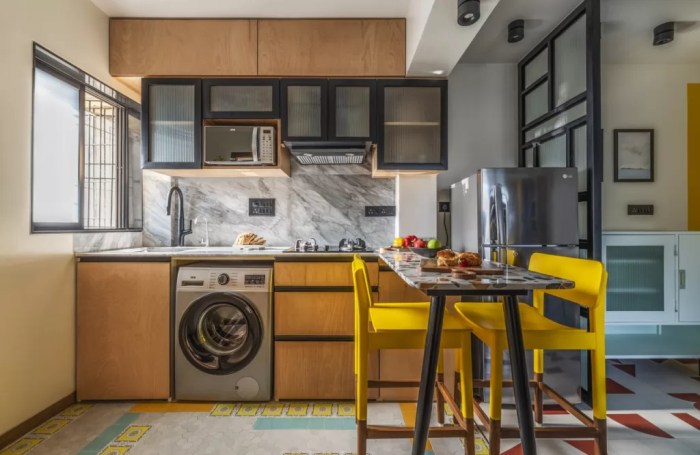
Source: thearchitectsdiary.com
Visually connecting the kitchen to the living or dining area creates a cohesive and inviting open concept space. Consistent flooring and paint colors are essential for achieving this connection. Using the same flooring throughout both areas creates a seamless transition. Similarly, choosing a complementary color palette for the walls and cabinetry helps to tie the spaces together.
Furniture arrangement can define zones within the open concept space. For example, a sofa can delineate the living area from the kitchen, while a dining table can create a separate dining zone. Architectural elements, such as archways or half-walls, can subtly separate spaces without completely closing them off. These elements provide a visual break while maintaining the open feel.
Design Styles for Small Open Concept Kitchens
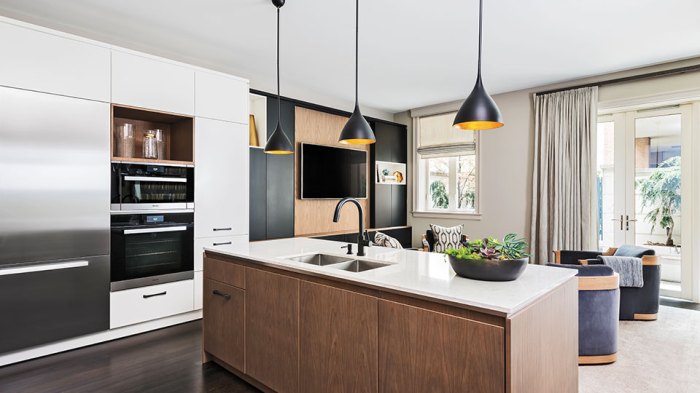
Source: cloudfront.net
Adapting popular kitchen design styles to a small open concept space requires careful consideration. The goal is to create a cohesive and inviting space that reflects your personal taste.
Modern: Characterized by clean lines, minimalist aesthetics, and a focus on functionality. In a small space, this translates to sleek cabinetry, stainless steel appliances, and a neutral color palette.
Farmhouse: Emphasizes rustic charm, natural materials, and a cozy atmosphere. In a small kitchen, this can be achieved with shiplap walls, open shelving, and a farmhouse sink.
Minimalist: Focuses on simplicity, functionality, and a clutter-free environment. This style is ideal for small spaces, as it emphasizes maximizing space and minimizing distractions.
Scandinavian: Combines functionality, simplicity, and natural light. This style is well-suited for small kitchens, as it emphasizes bright colors, natural materials, and a cozy atmosphere.
Maintaining a consistent design theme throughout the open concept area is crucial. This creates a cohesive and harmonious look. Incorporating personal touches and accessories, such as artwork, plants, and decorative items, adds personality and creates a unique and inviting space.
Last Word
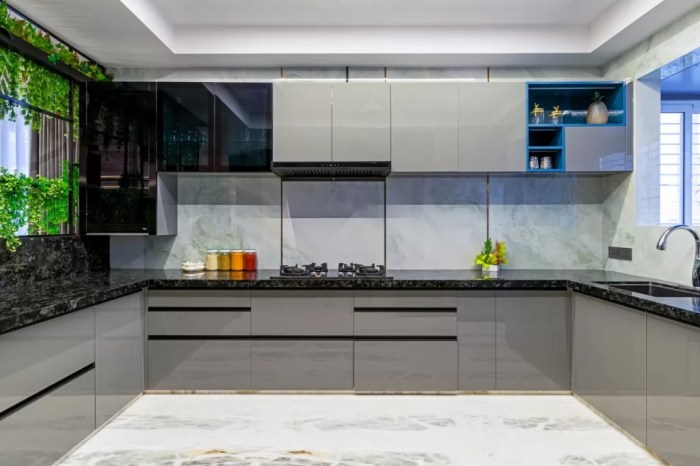
Source: thearchitectsdiary.com
Ultimately, crafting the perfect kitchen layout for a small open concept space hinges on a thoughtful balance of functionality, aesthetics, and personal preference. By embracing innovative storage solutions, optimizing workflow, and carefully considering material and lighting choices, you can create a kitchen that feels both spacious and inviting.
Remember that successful design isn’t just about maximizing space; it’s about creating a harmonious environment that seamlessly integrates with your lifestyle and enhances the overall flow of your home. With careful planning and a touch of creativity, even the smallest kitchen can become the heart of your home.
FAQ Guide
What is the best way to handle ventilation in an open concept kitchen?
A powerful range hood vented to the exterior is crucial. Consider a stylish, integrated hood to maintain the open aesthetic. Proper ventilation prevents cooking odors from spreading throughout the living space.
How can I define the kitchen space within an open concept layout?
Use changes in flooring, a kitchen island or peninsula, different paint colors, or strategically placed furniture to visually delineate the kitchen area without creating a closed-off feel.
Are kitchen islands practical for very small kitchens?
Islands require sufficient clearance (at least 36-48 inches) around them. If space is extremely limited, a peninsula might be a more practical option, offering similar benefits with a smaller footprint.
What are some affordable countertop materials for a small kitchen?
Laminate countertops are a budget-friendly option that comes in a wide variety of colors and patterns. Butcher block is another relatively affordable choice, offering warmth and character.
How can I make a small kitchen feel less cluttered?
Prioritize vertical storage, utilize drawer dividers, and regularly declutter countertops. Concealing appliances and incorporating built-in storage solutions can also significantly reduce visual clutter.