How to organize kitchen pantry maximize space is a common challenge for many homeowners, often resulting in cluttered shelves and wasted food. A well-organized pantry isn’t just visually appealing; it’s a cornerstone of an efficient kitchen, leading to significant cost savings, reduced food waste, and streamlined meal preparation. This guide will provide a comprehensive approach to transforming your pantry from a source of frustration into a functional and inviting space.
We’ll explore various pantry types, decluttering techniques, space-saving strategies, and maintenance routines, ensuring you have the tools and knowledge to create a pantry that perfectly suits your needs and lifestyle. From utilizing vertical space to implementing clever containerization methods, we’ll cover every aspect of pantry organization to help you achieve a beautifully organized and highly efficient kitchen.
Organizing Your Kitchen Pantry for Maximum Space
A well-organized kitchen pantry is more than just aesthetically pleasing; it’s a cornerstone of an efficient and cost-effective kitchen. Many of us struggle with pantries that quickly become chaotic, leading to wasted food, duplicated purchases, and mealtime stress. This guide will walk you through a comprehensive approach to pantry organization, transforming your space into a functional and inviting area.
This isn’t about achieving picture-perfect Instagram-worthy shelves. It’s about creating a system that works
-for you* and your family, saving you time, money, and frustration in the long run.
Understanding Pantry Challenges & Goals
Common kitchen pantry organization problems often stem from inefficient use of space and difficulty accessing items. Deep shelves can hide items, leading to forgotten ingredients and eventual expiration. Overcrowding makes it hard to see what you have, resulting in unnecessary purchases. A lack of clear categorization further exacerbates these issues.
The benefits of a well-organized pantry extend far beyond aesthetics. You’ll experience significant cost savings by reducing food waste and avoiding duplicate purchases. Meal planning becomes more efficient when you can quickly see what ingredients you have on hand. A tidy pantry also contributes to a calmer, more enjoyable cooking experience.
Different pantry types require tailored organizational approaches. Here’s a breakdown:
| Pantry Type | Common Issues | Space Maximization Techniques | Estimated Cost |
|---|---|---|---|
| Walk-in Pantry | Wasted floor space, difficulty reaching high shelves, items getting lost in the back. | Adjustable shelving, door organizers, rolling carts, tiered shelving units. | $50 – $500+ (depending on shelving and accessories) |
| Cabinet Pantry | Limited vertical space, difficulty accessing items in corners, cluttered shelves. | Shelf risers, pull-out drawers, door organizers, lazy Susans. | $30 – $200+ (depending on accessories) |
| Pull-Out Pantry | Narrow shelves, potential for items to fall over, limited flexibility. | Adjustable dividers, containerization, maximizing depth with smaller containers. | $100 – $800+ (depending on the system) |
Before diving into organization, it’s crucial to understand your current pantry usage. Take a few days to observe what you reach for most often and what items consistently remain untouched. This will inform your zoning and placement decisions later on.
Initial Pantry Decluttering & Inventory
The first step towards a functional pantry is a complete declutter. This means emptying
-everything* out. Resist the urge to just rearrange; a thorough clean and assessment are essential. This is the time to be ruthless!
As you empty the pantry, meticulously check expiration dates. Discard any expired items safely – compost them if possible, or dispose of them properly. Don’t forget to check dates on spices and baking ingredients, as they lose potency over time. A good rule of thumb is if you can’t remember when you bought it, it’s probably time to let it go.
Categorizing your pantry items will form the foundation of your organization system. Consider these categories:
- Baking
- Flour
- Sugar
- Baking Powder/Soda
- Chocolate Chips
- Extracts
- Snacks
- Chips
- Crackers
- Granola Bars
- Nuts
- Dried Fruit
- Canned Goods
- Vegetables
- Fruits
- Soups
- Beans
- Breakfast
- Cereal
- Oatmeal
- Pancake Mix
- Coffee/Tea
- Pasta & Grains
- Pasta (various shapes)
- Rice
- Quinoa
- Couscous
Once you’ve decluttered and categorized, take inventory of what remains. You can use a simple handwritten list, a detailed spreadsheet, or a mobile app designed for pantry management. The key is to have a clear record of what you have, so you can avoid unnecessary purchases and plan meals effectively.
Maximizing Vertical Space, How to organize kitchen pantry maximize space
Source: chesmar.com
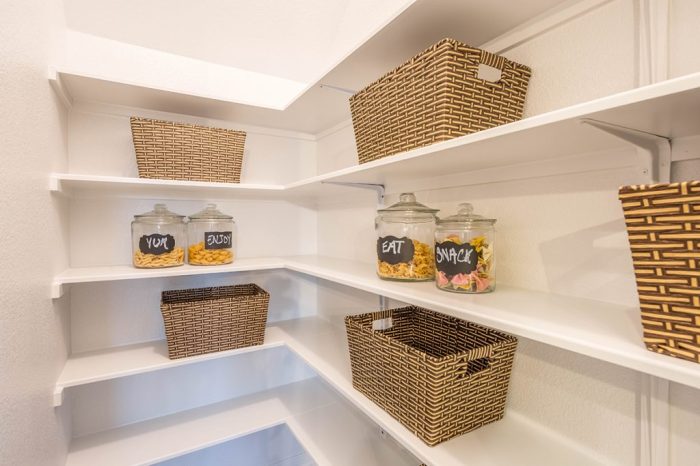
Pantry height is often underutilized. Adjustable shelving is your best friend here. Being able to customize shelf heights to accommodate different item sizes prevents wasted space above shorter items.
When planning your shelving, consider the height and depth of your items. Here’s a sample plan:
| Shelf Height | Item Type | Example Items |
|---|---|---|
| 12-15 inches | Canned Goods & Jars | Soup cans, pasta sauce jars, pickle jars |
| 15-18 inches | Cereal & Boxes | Cereal boxes, cracker boxes, granola bars |
| 18-24 inches | Baking Supplies & Larger Containers | Flour canisters, sugar containers, large pasta containers |
Shelf risers and stackable containers are invaluable for creating multiple levels within a single shelf. This is particularly useful for smaller items like spices or canned goods. Over-the-door organizers are fantastic for storing smaller, frequently used items, freeing up valuable shelf space.
Containerization Strategies
Choosing the right containers is crucial for maintaining organization and freshness. Clear plastic containers are a popular choice, allowing you to easily see the contents. Glass containers offer a more sophisticated look and are ideal for storing dry goods. Metal containers are durable and can add a rustic touch. Woven baskets are great for concealing clutter and adding texture.
Using uniform containers creates a cohesive and visually appealing look. It also makes stacking and organizing much easier. Consider investing in a set of containers in various sizes.
Here’s a guide to container sizes for common pantry staples:
| Item | Recommended Container Size | Material | Cost Range |
|---|---|---|---|
| Flour | 4-8 Quart | Plastic or Glass | $10 – $30 |
| Sugar | 4-6 Quart | Plastic or Glass | $8 – $25 |
| Pasta | 2-4 Quart | Plastic or Glass | $5 – $15 |
| Cereal | 2-3 Quart | Plastic | $5 – $10 |
Labeling containers clearly and consistently is essential. Use a label maker, chalkboard labels, or even simple masking tape and a marker. Include the item name and expiration date (if applicable).
Utilizing Door Space & Wall Areas
Over-the-door pantry organizers are a game-changer for maximizing space. They’re perfect for storing spices, snacks, cleaning supplies, or small jars. Ensure the door can still close comfortably with the organizer installed.
Wall-mounted spice racks or magnetic knife strips free up counter and drawer space. Hanging produce bags or reusable shopping bags on hooks keeps them readily accessible and prevents clutter. Consider using chalkboard paint or whiteboard panels on pantry doors for creating shopping lists or meal reminders.
Specific Food Category Organization
Organizing canned goods effectively involves rotating stock – placing newer items behind older ones to ensure you use the oldest cans first. Can organizers create tiered storage, making it easier to see all your options. Grouping cans by type (vegetables, fruits, soups) further simplifies things.
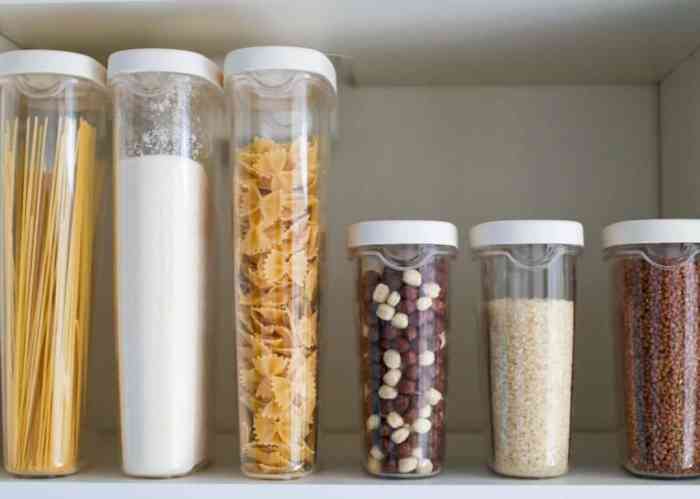
For dry goods like pasta, rice, and cereal, airtight containers are essential to maintain freshness and prevent pests. Decanting into smaller portions makes it easier to grab what you need without opening the entire package. Snack organization benefits from designated zones for kids and adults, preventing arguments and promoting healthy choices. Baking supplies should be grouped together, with frequently used ingredients kept within easy reach.
Creating Zones & Accessibility
Pantry zones are dedicated areas for different food categories. This makes it easy to find what you’re looking for and prevents items from getting lost. Arrange items based on frequency of use – frequently used items at eye level, less used items higher or lower. This minimizes bending and reaching.
Creating clear pathways and avoiding overcrowding is crucial for maintaining organization. Don’t stack items too high, as they can topple over. Arrange items to make meal preparation easier.
Meal Prep Arrangement Guide: 1. Designate a “meal prep zone” with frequently used ingredients like spices, oils, and cooking utensils. 2. Group ingredients for common meals together. 3.
Keep cutting boards and mixing bowls nearby. 4. Ensure easy access to frequently used pantry staples like pasta, rice, and canned tomatoes.
Maintaining Pantry Organization
A weekly pantry check is essential for removing expired items and reorganizing. Incorporate pantry organization into your grocery shopping habits by checking your inventory before you go to the store. Prevent clutter buildup by putting items away immediately after use. Here are some quick fixes for common issues:
- Spilled Items: Wipe up immediately to prevent sticky messes.
- Overcrowded Shelves: Remove unnecessary items or invest in additional storage solutions.
- Unlabeled Containers: Label immediately to avoid confusion.
- Expired Items: Discard promptly to maintain freshness.
Innovative Space-Saving Solutions
Pull-out pantry shelves and drawers significantly improve accessibility, especially in deep pantries. Repurposing furniture like bookshelves or rolling carts provides additional storage options. Lazy Susans are perfect for corner pantry spaces, allowing you to easily access items that would otherwise be hidden. DIY pantry organization projects using affordable materials like cardboard boxes or repurposed jars can be a cost-effective way to customize your space.
Visualizing an Organized Pantry
Source: twigandthistle.com
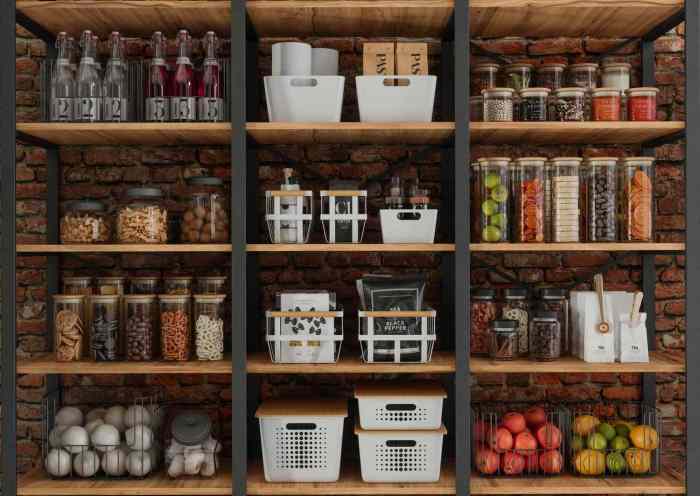
Imagine a pantry with neatly arranged shelves, each dedicated to a specific food category. Clear containers showcase colorful pasta, rice, and cereal. Spice jars are organized alphabetically on a wall-mounted rack. Baking supplies are grouped together in airtight containers, with measuring cups and spoons readily accessible. Labels are crisp and easy to read.
The space feels calm, inviting, and incredibly functional. Soft, diffused lighting illuminates every corner, making it easy to find what you need.
To visualize your own organized pantry, create a mood board or sketch of your desired layout. Consider different pantry styles – modern, farmhouse, minimalist – and their organizational approaches. Good lighting is essential for visibility and aesthetics, so consider adding under-shelf lighting or a bright overhead fixture.
Last Recap
Source: mamasmusthaves.com
Ultimately, learning how to organize kitchen pantry maximize space is an investment in your time, money, and overall well-being. By implementing the strategies discussed – from initial decluttering and strategic zoning to consistent maintenance – you can transform your pantry into a highly functional and visually appealing area. Remember, a well-organized pantry isn’t a one-time project, but rather a continuous process of refinement and adaptation.
Embrace these techniques, personalize them to your specific needs, and enjoy the benefits of a clutter-free, efficient, and inviting kitchen pantry. The result will be a more enjoyable cooking experience, reduced food waste, and a greater sense of calm and control in your home.
Clarifying Questions: How To Organize Kitchen Pantry Maximize Space
What is the best way to deal with pantry moths?
Thoroughly clean the pantry, discarding any infested items. Vacuum all shelves and cracks. Use pheromone traps to catch adult moths and consider storing susceptible items in airtight containers.
How often should I completely reorganize my pantry?
A complete reorganization is recommended twice a year, typically during seasonal changes. However, weekly checks and minor adjustments are crucial for maintaining order.
What are some affordable pantry organization options?
Repurposing existing containers, using cardboard boxes temporarily, and utilizing dollar store finds are excellent affordable options. DIY projects with inexpensive materials can also be very effective.
How can I involve my family in maintaining pantry organization?
Assign specific tasks to family members, such as checking expiration dates or putting away groceries. Make it a collaborative effort to foster a sense of shared responsibility.
Is it better to organize by meal type or food category?
Food category organization is generally more efficient for inventory and restocking. However, if you frequently plan meals around specific types (e.g., breakfast items together), organizing by meal type might be preferable.