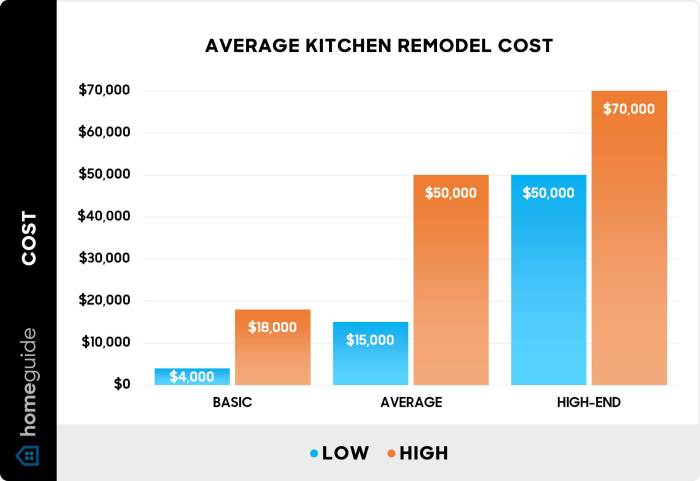
Affordable kitchen remodel costs breakdown estimates are essential for homeowners planning a renovation. A kitchen remodel is a significant investment, and understanding the potential expenses involved is crucial for effective budgeting and avoiding unwelcome financial surprises. This guide provides a comprehensive overview of the various cost components, from cabinetry and countertops to appliances and labor, offering insights into how to achieve your dream kitchen without breaking the bank.
We will explore the factors that influence pricing, the different tiers of remodeling projects, and strategies for maximizing your budget. Whether you’re considering a minor refresh or a complete overhaul, this information will empower you to make informed decisions and navigate the remodeling process with confidence. Understanding regional variations and the benefits of contingency planning will also be covered to ensure a smooth and successful project.
Understanding Kitchen Remodel Costs
Embarking on a kitchen remodel is an exciting prospect, but it’s crucial to approach the project with a clear understanding of the potential expenses involved. Kitchen renovations can range dramatically in price, influenced by a multitude of factors. This guide provides a detailed breakdown of costs, helping you budget effectively and avoid unwelcome surprises. We’ll cover everything from cabinetry and countertops to appliances, labor, and potential unexpected expenses.
The scope of your remodel significantly impacts the overall cost. A simple refresh – perhaps new paint, hardware, and a faucet – will be far less expensive than a complete overhaul involving layout changes, new appliances, and custom cabinetry. Location also plays a key role, as material and labor costs vary considerably across the country. This breakdown will provide realistic estimates to help you plan your dream kitchen within a comfortable budget.
Remodel Tiers and Cost Ranges
To provide a clearer picture, we’ve categorized kitchen remodels into three tiers: basic, mid-range, and high-end. Each tier represents a different level of investment and features. These are broad ranges, and actual costs will vary based on your specific choices and location.
| Tier | Scope of Work | Estimated Cost Range | Typical Features |
|---|---|---|---|
| Basic | Cosmetic updates; no structural changes. | $5,000 – $15,000 | Paint, new hardware, updated faucet, laminate countertops, appliance refresh (same footprint). |
| Mid-Range | Moderate updates; some layout changes possible. | $25,000 – $50,000 | New semi-custom cabinetry, quartz countertops, new appliances (standard models), updated flooring, backsplash. |
| High-End | Full renovation; significant layout changes, premium materials. | $60,000+ | Custom cabinetry, high-end appliances, granite or marble countertops, designer flooring, custom backsplash, potential structural modifications. |
Cabinetry Costs: A Detailed Examination
Cabinetry typically represents a significant portion of a kitchen remodel budget – often 30% to 40%. The type of cabinets you choose, along with the materials used, will heavily influence the final cost. Understanding the different options available is essential for making informed decisions.
There are three primary types of kitchen cabinets: stock, semi-custom, and custom. Stock cabinets are pre-built in standard sizes and are the most affordable option. Semi-custom cabinets offer more flexibility in terms of sizes and finishes, while custom cabinets are built to your exact specifications, providing the highest level of personalization but also the highest price tag.
Cabinet Materials and Their Impact on Cost
The material used to construct your cabinets also plays a crucial role in both cost and durability. Solid wood cabinets are the most expensive and offer a classic, high-quality look. Plywood is a durable and stable option, often used for cabinet boxes. MDF (Medium-Density Fiberboard) is a cost-effective alternative, but it’s less resistant to moisture. Particleboard is the least expensive material, but it’s also the least durable.
| Material | Average Cost/Linear Foot | Pros | Cons |
|---|---|---|---|
| Solid Wood (Maple, Oak, Cherry) | $300 – $800+ | Durable, beautiful, can be refinished. | Expensive, susceptible to warping with moisture. |
| Plywood | $150 – $300 | Strong, stable, resists warping. | More expensive than MDF or particleboard. |
| MDF | $80 – $150 | Smooth surface, paints well, cost-effective. | Susceptible to moisture damage, less durable than wood or plywood. |
| Particleboard | $50 – $100 | Least expensive option. | Least durable, prone to damage, difficult to repair. |
Cabinet installation costs typically range from $100 to $300 per linear foot, including labor and hardware (knobs, pulls, hinges). This cost can vary depending on the complexity of the installation and your location.
Countertop Material Options and Pricing
After cabinetry, countertops are often the next largest expense in a kitchen remodel. The material you choose will significantly impact the overall look and feel of your kitchen, as well as its durability and maintenance requirements. Several popular options are available, each with its own set of advantages and disadvantages.
Common countertop materials include granite, quartz, laminate, butcher block, and solid surface. Granite is a natural stone known for its durability and unique patterns. Quartz is an engineered stone that offers similar durability with a wider range of color options. Laminate is a budget-friendly option that comes in a variety of colors and patterns. Butcher block provides a warm, natural look but requires regular maintenance.
Solid surface countertops are seamless and non-porous, making them hygienic and easy to clean.
Factors Influencing Countertop Pricing
Countertop pricing is influenced by several factors, including the material itself, the thickness of the slab, the edge profile (e.g., bullnose, eased edge), and the complexity of the fabrication. Custom edge profiles and intricate cutouts will increase the cost. The amount of material needed, determined by the size and shape of your countertops, also plays a role.
- Granite: $40 – $100 per square foot (installed)
- Quartz: $50 – $150 per square foot (installed)
- Laminate: $10 – $40 per square foot (installed)
- Butcher Block: $35 – $80 per square foot (installed)
- Solid Surface: $40 – $75 per square foot (installed)
For example, a simple granite countertop installation with a standard eased edge will be less expensive than a quartz countertop with a complex bullnose edge and a custom sink cutout.
Appliance Expenses: Budgeting for New or Existing Units: Affordable Kitchen Remodel Costs Breakdown Estimates
Appliances can represent a substantial portion of your kitchen remodel budget. Whether you’re replacing all your appliances or simply updating a few, it’s important to factor in the cost of both the units themselves and their installation. Appliance packages can offer cost savings compared to purchasing individual appliances.
Appliance packages are typically categorized into basic, mid-range, and professional-grade. Basic packages include standard appliances with essential features. Mid-range packages offer improved features and performance. Professional-grade packages provide the highest level of performance and features, often with a premium price tag.
Average Appliance Price Ranges
Here’s a breakdown of average price ranges for individual appliances:
- Refrigerator: $800 – $3,000+
- Oven/Range: $600 – $2,500+
- Dishwasher: $500 – $1,500+
- Microwave: $100 – $800+
- Cooktop: $400 – $1,800+
Appliance installation costs can range from $150 to $500 per appliance, depending on the complexity of the installation and whether any electrical or plumbing work is required. For example, installing a gas cooktop will require a gas line connection, which will add to the cost.
Investing in energy-efficient appliances can save you money in the long run through reduced energy consumption. Look for appliances with the Energy Star label to ensure they meet strict energy efficiency guidelines.
Plumbing and Electrical Work Costs
Source: atimprovements.com
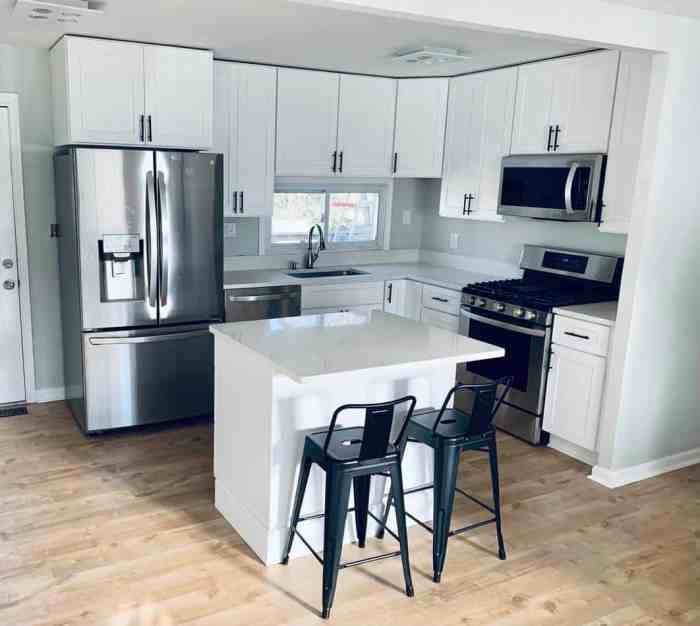
Kitchen remodels often require modifications to both plumbing and electrical systems. These modifications can range from simple tasks like replacing a faucet to more complex projects like relocating a sink or adding new electrical outlets. It’s crucial to factor in the cost of these services when budgeting for your remodel.
Typical plumbing modifications include sink relocation, faucet installation, dishwasher connection, and garbage disposal installation. Electrical work often involves adding outlets, upgrading lighting, and wiring new appliances. It’s important to hire licensed plumbers and electricians to ensure the work is done safely and to code.
Estimated Costs for Plumbing and Electrical Labor
Plumbing and electrical labor costs vary depending on your location and the complexity of the project. Hourly rates for plumbers and electricians typically range from $75 to $150. The total cost will depend on the number of hours required to complete the work.
| Task | Estimated Labor Hours | Hourly Rate | Estimated Cost |
|---|---|---|---|
| Faucet Installation | 1-2 | $100 | $100 – $200 |
| Sink Relocation | 4-8 | $100 | $400 – $800 |
| Dishwasher Connection | 2-4 | $100 | $200 – $400 |
| Outlet Addition | 2-4 | $125 | $250 – $500 |
| Lighting Upgrade | 3-6 | $125 | $375 – $750 |
Flooring Choices and Installation Expenses
New flooring can dramatically transform the look of your kitchen. Several options are available, each with its own unique characteristics and price point. Choosing the right flooring material depends on your budget, lifestyle, and aesthetic preferences.
Common kitchen flooring options include tile, hardwood, laminate, and vinyl. Tile is durable, water-resistant, and available in a wide range of styles. Hardwood provides a classic, warm look but requires more maintenance. Laminate is a cost-effective alternative to hardwood that offers good durability. Vinyl is waterproof and easy to clean, making it a practical choice for kitchens.
Factors Influencing Flooring Installation Costs
Flooring installation costs are influenced by several factors, including the type of flooring, the size of the kitchen, subfloor preparation, and pattern complexity. If your subfloor is uneven or damaged, it will need to be repaired or leveled before the new flooring can be installed. Intricate patterns, such as herringbone or diagonal layouts, will also increase the installation cost.
- Tile: $5 – $20 per square foot (installed)
- Hardwood: $8 – $25 per square foot (installed)
- Laminate: $3 – $10 per square foot (installed)
- Vinyl: $2 – $7 per square foot (installed)
For instance, installing ceramic tile over a prepared subfloor will be less expensive than installing hardwood flooring over an uneven subfloor that requires extensive leveling.
Backsplash Materials and Installation
Source: livefreecreative.co
A backsplash is a great way to add personality and style to your kitchen. It also protects your walls from splashes and spills. Numerous materials are available, ranging from affordable options like tile to more luxurious choices like glass and stone.
Popular backsplash materials include tile, glass, stone, and metal. Tile is a versatile and cost-effective option that comes in a wide variety of colors, shapes, and sizes. Glass backsplashes offer a sleek, modern look. Stone backsplashes provide a natural, textured appearance. Metal backsplashes add a touch of industrial chic.
Impact of Backsplash Design on Installation Expenses, Affordable kitchen remodel costs breakdown estimates
The complexity of your backsplash design will significantly impact the installation cost. Simple designs, such as a straight-lay tile pattern, are relatively easy to install. More intricate designs, such as mosaics or patterned layouts, require more time and skill, increasing the labor cost.
| Material | Average Cost/Square Foot | Style | Durability |
|---|---|---|---|
| Ceramic Tile | $5 – $20 | Traditional, Modern, Rustic | High |
| Glass Tile | $10 – $30 | Modern, Contemporary | Medium |
| Stone Tile (Marble, Granite) | $15 – $50+ | Elegant, Natural | Medium to High |
| Metal Tile | $20 – $60+ | Industrial, Modern | Medium |
Backsplash installation costs typically range from $10 to $30 per square foot, including materials and labor. This cost can vary depending on the material, the complexity of the design, and your location.
Labor Costs: Regional Variations and Contractor Fees
Labor costs represent a significant portion of any kitchen remodel project. These costs vary considerably depending on your geographic location and the type of contractor you hire. Understanding these variations is crucial for accurate budgeting.
Labor costs are generally higher in metropolitan areas and regions with a high cost of living. Factors contributing to these differences include demand for skilled tradespeople, local wage rates, and the cost of doing business. It’s important to obtain quotes from multiple contractors in your area to get a realistic estimate of labor costs.
Types of Kitchen Remodel Contractors and Fee Structures
There are two main types of kitchen remodel contractors: general contractors and specialized tradespeople. General contractors oversee the entire project, coordinating all the different trades involved. Specialized tradespeople focus on specific tasks, such as plumbing, electrical work, or cabinetry installation. General contractors typically charge a percentage markup on the cost of materials and labor, while specialized tradespeople typically charge an hourly rate.
When obtaining quotes from contractors, be sure to ask for a detailed breakdown of all costs, including labor, materials, and permits. Compare the quotes carefully, paying attention to the scope of work included and the contractor’s experience and qualifications.
Contractor markup percentages typically range from 10% to 20%. This markup covers the contractor’s overhead costs, such as insurance, administrative expenses, and profit. Some contractors may also charge a separate project management fee.
Unexpected Expenses: Contingency Planning
Even with careful planning, unexpected expenses can arise during a kitchen remodel. These expenses can range from minor issues like discovering damaged drywall to more significant problems like hidden plumbing leaks or code violations. It’s essential to prepare for these unforeseen costs by including a contingency fund in your remodel budget.
Common unexpected expenses include hidden damage behind walls or under floors, code violations that require corrective action, material delays that disrupt the project schedule, and unforeseen plumbing or electrical issues. These issues can add significant costs to your remodel, so it’s important to be prepared.
The Importance of a Contingency Fund
A contingency fund is a reserve of money set aside to cover unexpected expenses. It provides a financial cushion to absorb these costs without derailing your project or forcing you to make compromises. The recommended percentage for a contingency fund is typically 10% to 20% of the total budget.
To effectively manage your contingency fund, track all expenses carefully and document any unexpected costs that arise. Regularly review your budget and contingency fund balance to ensure you’re on track. If you encounter a significant unexpected expense, reassess your budget and prioritize essential items.
DIY vs. Professional Installation: Cost Considerations
One of the first decisions you’ll need to make is whether to tackle any of the remodel work yourself (DIY) or hire professional contractors. DIY projects can save you money on labor costs, but they also require time, skill, and a willingness to learn. Professional installation ensures quality workmanship and adherence to building codes, but it comes at a higher cost.
Tasks suitable for DIY projects include painting, removing old hardware, and installing a backsplash (if you have experience). Tasks that typically require professional expertise include plumbing, electrical work, cabinetry installation, and structural modifications. Attempting these tasks without the necessary skills and knowledge can lead to costly mistakes and safety hazards.
Risks and Benefits of DIY Remodeling
Source: homeguide.com
The benefits of DIY remodeling include cost savings, a sense of accomplishment, and the ability to customize the project to your exact specifications. However, there are also risks to consider, including time commitment, skill level, potential for errors, and the possibility of voiding warranties. It’s important to honestly assess your skills and capabilities before taking on a DIY project.
| Task | DIY Material Cost | DIY Labor Hours | Professional Cost |
|---|---|---|---|
| Painting | $50 – $100 | 8-16 | $300 – $600 |
| Backsplash Installation (Simple Tile) | $200 – $500 | 16-32 | $800 – $1600 |
| Cabinet Installation | $500 – $1500 | 24-48 | $2000 – $4000 |
| Faucet Installation | $100 – $300 | 4-8 | $400 – $800 |
Conclusion
In conclusion, successfully navigating affordable kitchen remodel costs breakdown estimates requires careful planning, realistic budgeting, and a thorough understanding of the various expense categories. By considering material choices, labor costs, and potential unexpected expenses, homeowners can create a beautiful and functional kitchen that aligns with their financial goals. Remember to obtain multiple quotes, prioritize your needs, and don’t hesitate to explore DIY options where appropriate.
A well-planned remodel not only enhances your home’s value but also improves your daily living experience. With the information provided, you are now equipped to embark on your kitchen renovation journey with clarity and confidence, transforming your space into the heart of your home while staying within a comfortable budget.
FAQ Summary
What is a reasonable contingency fund percentage?
A contingency fund of 10-20% of the total budget is recommended to cover unexpected issues like hidden damage or material delays.
How can I save money on kitchen cabinets?
Consider stock cabinets instead of custom, explore refacing existing cabinets, or look for sales and discounts.
Are permits always required for a kitchen remodel?
Permit requirements vary by location and the scope of work. It’s best to check with your local building department.
What is the average lifespan of different countertop materials?
Laminate typically lasts 10-20 years, solid surface 15-25 years, butcher block with proper care can last a lifetime, quartz 20-30 years, and granite can also last a lifetime.
How do I find a reputable kitchen contractor?
Seek recommendations from friends and family, check online reviews, verify licenses and insurance, and obtain multiple quotes.