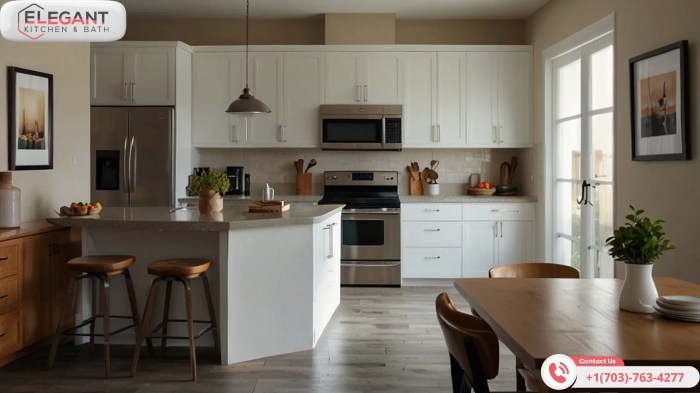
Best kitchen cabinet materials for durability are a crucial consideration when renovating or building a kitchen, as they significantly impact the longevity and aesthetic appeal of the space. Choosing the right materials involves balancing initial costs with long-term performance, considering factors like moisture exposure, daily wear and tear, and desired maintenance levels. This guide explores a range of options, from traditional solid wood to innovative composite materials, providing a comprehensive overview to help you make an informed decision.
Kitchen cabinets endure a great deal – frequent opening and closing, spills, heat, and humidity. Understanding how different materials respond to these challenges is essential. We’ll delve into the strengths and weaknesses of each material, examining their resistance to warping, denting, staining, and water damage, ultimately guiding you toward the most suitable choice for your lifestyle and budget.
Best Kitchen Cabinet Materials for Durability
Kitchen cabinets are a significant investment, and choosing the right materials is crucial for ensuring they withstand daily use and maintain their appearance for years to come. Durability isn’t just about resisting dents; it encompasses how well a material handles moisture, temperature fluctuations, cleaning, and general wear and tear. This guide will explore the most common kitchen cabinet materials, evaluating their strengths, weaknesses, and long-term performance.
The longevity of your kitchen cabinets depends on a combination of the material itself, the quality of construction, and how you use and maintain them. High-traffic kitchens with frequent cooking and cleaning will naturally put more stress on cabinets than those used less often. Environmental factors, like humidity and temperature swings, also play a role. For example, solid wood cabinets in a humid climate are more prone to warping if not properly sealed.
Understanding these factors will help you make an informed decision when selecting cabinet materials.
Common kitchen cabinet materials include solid wood, plywood, MDF (Medium-Density Fiberboard), particleboard, thermofoil, and metal. Each material offers a different balance of cost, durability, and aesthetic appeal. Solid wood is generally the most durable but also the most expensive. Plywood offers a good compromise between cost and durability, while MDF and particleboard are more affordable options but require more careful consideration regarding moisture exposure.
Thermofoil provides a sleek look but can be susceptible to damage, and metal offers exceptional durability and a modern aesthetic.
| Material | Initial Cost (per linear foot) | Durability Rating (1-5, 5 being highest) | Moisture Resistance | Maintenance Level |
|---|---|---|---|---|
| Solid Wood | $150 – $400+ | 5 | Moderate (requires sealing) | Moderate |
| Plywood | $80 – $200 | 4 | Good | Low |
| MDF | $50 – $120 | 3 | Poor (requires sealing) | Low-Moderate |
| Particleboard | $30 – $80 | 2 | Very Poor | Low |
| Thermofoil | $60 – $150 | 3 | Good | Low |
Solid Wood Cabinets: Characteristics & Performance
Solid wood cabinets are a classic choice, prized for their beauty, durability, and ability to be refinished. However, not all wood is created equal. Different species offer varying levels of hardness, stability, and resistance to moisture. Choosing the right wood for your kitchen is essential for long-term satisfaction.
Maple is a popular choice due to its hardness and fine grain, making it resistant to dents and scratches. Oak is another durable option, known for its prominent grain pattern. Cherry offers a rich, warm color and becomes more beautiful with age, but it’s softer than maple or oak and more susceptible to dents. Hickory is exceptionally durable and has a rustic appearance, while birch is a more affordable option but less resistant to wear and tear.
The wood grain pattern significantly impacts how wear and tear are perceived over time. A prominent grain can help camouflage scratches and dents, while a smoother grain will show imperfections more readily.
- Finish Type
- Durability Impact
- Maintenance Requirements
- Polyurethane
- Excellent durability, water resistance, and scratch resistance.
- Minimal maintenance; occasional cleaning with a mild detergent.
- Varnish
- Good durability and water resistance, but less scratch-resistant than polyurethane.
- Regular dusting and occasional cleaning with a furniture polish.
- Paint
- Offers a wide range of color options but requires more frequent touch-ups, especially in high-use areas.
- Regular cleaning and touch-ups as needed.
- Oil-Based Stain
- Enhances the natural beauty of the wood but offers limited protection against moisture and scratches.
- Regular oiling and waxing to maintain the finish.
Plywood Cabinets: Construction & Resilience
Plywood is a versatile and cost-effective material for kitchen cabinets, offering a good balance of strength and stability. The quality of plywood varies significantly depending on the grade and core material used in its construction. Understanding these differences is crucial for selecting plywood that will withstand the demands of a kitchen environment.
Plywood is constructed from multiple layers of wood veneer glued together, with the grain of each layer running perpendicular to the others. This layered construction provides exceptional stability and resistance to warping and cracking. Higher grades of plywood, such as birch plywood or maple plywood, use higher-quality veneers and adhesives, resulting in a stronger and more durable product. Lower grades, like pine plywood, are more affordable but less resistant to wear and tear.
Plywood generally outperforms solid wood in terms of moisture resistance because it’s less likely to warp or swell when exposed to humidity. However, the core material plays a significant role. Hardwood core plywood offers superior moisture resistance compared to softwood core plywood.
Plywood cabinets are well-suited for heavy use and can withstand impacts without easily cracking or splitting. The layered construction distributes stress evenly, making them more resilient than solid wood in some cases. They also hold screws and fasteners securely, ensuring a strong and stable cabinet structure.
MDF (Medium-Density Fiberboard) Cabinets: Advantages & Limitations
MDF is an engineered wood product made from wood fibers combined with resin and pressed into panels. It’s a popular choice for kitchen cabinets due to its smooth surface, affordability, and ease of painting. However, MDF also has limitations, particularly regarding moisture resistance and structural strength.
The manufacturing process of MDF results in a very dense and uniform material, making it ideal for painting and creating a smooth, seamless finish. MDF is also less prone to warping or cracking than solid wood. However, it’s significantly more susceptible to water damage. When exposed to moisture, MDF can swell and lose its structural integrity. MDF’s stability is good, but it doesn’t have the same inherent strength as solid wood or plywood.
It’s best suited for cabinet doors and panels rather than structural components. Proper sealing and finishing are essential for enhancing the durability of MDF cabinets. Applying multiple coats of primer and paint, and using a moisture-resistant sealant, can help protect the MDF from water damage.
Edge banding materials and their impact on MDF cabinet longevity. Edge banding is crucial for protecting the exposed edges of MDF cabinets, which are particularly vulnerable to moisture and chipping. Common materials include PVC, wood veneer, and ABS. PVC is the most affordable option but can be prone to peeling over time. Wood veneer provides a more natural look but requires more careful application and maintenance. ABS offers a good balance of durability, cost, and ease of application. Choosing a high-quality edge banding material and ensuring it’s properly applied is essential for maximizing the lifespan of MDF cabinets.
Particleboard Cabinets: Cost-Effectiveness & Structural Integrity
Particleboard is another engineered wood product, made from wood particles bonded together with resin. It’s the most affordable option for kitchen cabinets but also the least durable. While particleboard can be a viable choice for budget-conscious homeowners, it’s important to understand its limitations and take steps to improve its durability.
Particleboard differs from MDF and plywood in its composition. MDF uses fine wood fibers, while plywood uses layers of wood veneer. Particleboard uses larger wood particles, resulting in a less dense and less stable material. Particleboard is highly susceptible to moisture damage. When exposed to water, it swells and crumbles, losing its structural integrity.
It also has limited structural strength and is prone to sagging under heavy loads. To improve the durability of particleboard cabinets, it’s essential to reinforce them with additional supports and use high-quality hardware. Using thicker particleboard panels and adding bracing to the cabinet frames can help increase their load-bearing capacity.
| Laminate Type | Scratch Resistance | Stain Resistance | Heat Resistance | Cost |
|---|---|---|---|---|
| Melamine | Low | Good | Poor | Low |
| High-Pressure Laminate (HPL) | Moderate | Excellent | Moderate | Moderate |
| Thermofused Laminate (TFL) | Moderate | Good | Poor | Low-Moderate |
| Vinyl | Moderate | Excellent | Moderate | Moderate |
Thermofoil Cabinets: Durability & Maintenance
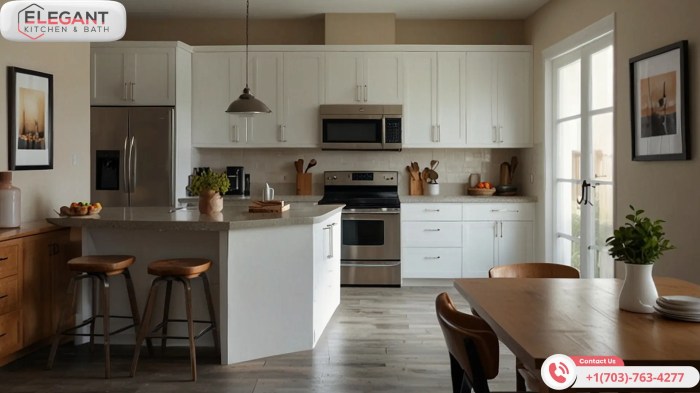
Source: elegantkitchenbath.com
Thermofoil cabinets feature a vinyl film applied to a core of MDF or particleboard. They offer a sleek, seamless look and are relatively affordable. However, thermofoil cabinets have specific durability concerns that need to be addressed to ensure long-term performance.
The thermofoil application process involves heating the vinyl film and wrapping it around the cabinet doors and drawers. This creates a smooth, durable surface that is resistant to moisture, stains, and fading. However, thermofoil can be susceptible to peeling or delamination, particularly around edges and corners. This is often caused by exposure to heat or improper installation. Preventative measures include avoiding excessive heat near the cabinets and ensuring the thermofoil is properly adhered during manufacturing.
Regular cleaning with a mild detergent and avoiding abrasive cleaners can also help prolong the life of thermofoil cabinets.
- Approved Cleaner
- Cleaning Method
- Frequency
- Mild Dish Soap
- Wipe with a damp cloth, then dry thoroughly.
- Weekly
- All-Purpose Cleaner (non-abrasive)
- Spray onto a cloth and wipe the surface.
- Monthly
- Warm Water
- Wipe with a damp cloth.
- Daily
Metal Cabinets: Strength & Corrosion Resistance
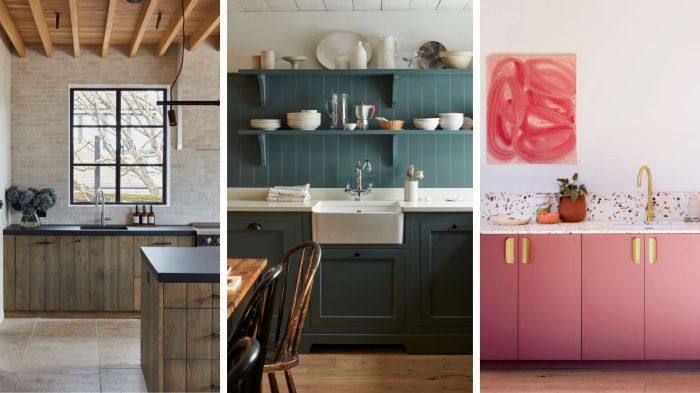
Source: futurecdn.net
Metal cabinets, typically made from stainless steel or aluminum, offer exceptional durability, fire resistance, and pest control. They are a popular choice for commercial kitchens and are gaining popularity in residential settings for their modern aesthetic and long-lasting performance.
Stainless steel is the most common metal used for kitchen cabinets due to its strength, corrosion resistance, and hygienic properties. Aluminum is a lighter-weight option that is also corrosion-resistant but less durable than stainless steel. Metal cabinets are incredibly strong and can withstand heavy use and potential impacts without easily denting or warping. They are also fire-resistant, providing an added layer of safety.
Different metal finishes impact corrosion resistance and aesthetic appeal. Brushed stainless steel offers a sleek, modern look and is highly resistant to corrosion. Powder-coated finishes provide a durable and colorful option but may be more susceptible to scratches. Metal cabinets withstand heavy use and potential impacts exceptionally well, maintaining their structural integrity over time. Their robust construction ensures they remain stable and secure, even under demanding conditions.
Composite Materials: Emerging Options for Durability
Newer composite materials are emerging as promising options for kitchen cabinet construction, offering unique combinations of properties and performance characteristics. These materials often aim to address the limitations of traditional materials, providing enhanced durability, water resistance, and aesthetic appeal.
Acrylic is a popular composite material known for its high gloss finish and excellent scratch resistance. Polymer blends, such as those incorporating recycled plastics, offer a sustainable and durable alternative to traditional materials. These materials generally exhibit excellent water resistance, scratch resistance, and UV stability, making them well-suited for kitchen environments. Compared to traditional cabinet materials, these composites often offer a higher initial cost but can provide long-term value due to their durability and low maintenance requirements.
For example, acrylic cabinets may cost more than MDF cabinets initially, but their superior scratch resistance can eliminate the need for frequent repainting.
Imagine a composite cabinet door constructed with a core of reinforced polymer, sandwiched between two layers of high-density acrylic. The polymer core provides structural strength and impact resistance, while the acrylic layers offer a smooth, glossy surface that is resistant to scratches and stains. The entire door is sealed with a waterproof edge banding to prevent moisture intrusion. This layered construction creates a cabinet door that is both durable and aesthetically pleasing, offering a modern and long-lasting solution for kitchen storage.
Outcome Summary
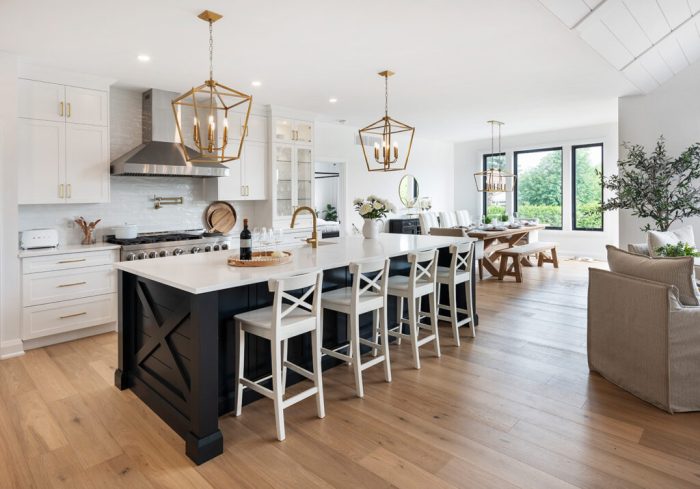
Source: laurysenkitchens.com
Ultimately, selecting the best kitchen cabinet materials for durability hinges on a careful evaluation of your needs and priorities. While solid wood offers timeless beauty and repairability, plywood and MDF provide cost-effective stability. Thermofoil and metal offer unique advantages in terms of maintenance and resilience, while emerging composite materials present exciting possibilities for the future.
By considering the factors discussed – initial cost, long-term durability, moisture resistance, and maintenance requirements – you can confidently choose materials that will withstand the test of time and enhance the functionality and beauty of your kitchen for years to come. A well-informed decision ensures a lasting investment in your home.
Essential FAQs: Best Kitchen Cabinet Materials For Durability
What is the best material for kitchen cabinets in a humid climate?
Plywood with a hardwood core generally performs best in humid climates due to its stability and resistance to warping compared to solid wood or MDF. Proper sealing is still essential.
How can I extend the life of MDF cabinets?
Thorough sealing with multiple coats of primer and paint is crucial for MDF cabinets. Pay close attention to edge banding, ensuring it’s securely applied and well-sealed to prevent moisture ingress.
Are thermofoil cabinets prone to damage from heat?
Yes, thermofoil can be susceptible to damage from direct heat. Avoid placing hot items directly on thermofoil surfaces and use trivets or heat-resistant mats.
What are the benefits of stainless steel kitchen cabinets?
Stainless steel cabinets are exceptionally durable, fire-resistant, and pest-proof. They are also easy to clean and maintain, offering a modern aesthetic.
Is it possible to paint over existing thermofoil cabinets?
Painting thermofoil is challenging and often doesn’t result in a long-lasting finish. Proper preparation, including thorough cleaning, sanding, and priming with a specialized primer, is essential, but professional refinishing is often recommended.