Kitchen countertop materials pros and cons comparison is a crucial decision for any homeowner undertaking a kitchen renovation or new build. Selecting the ideal surface requires careful consideration of numerous factors, extending beyond mere aesthetics. This detailed exploration will guide you through the advantages and disadvantages of various popular materials, empowering you to make an informed choice that aligns with your lifestyle, budget, and design preferences.
From the timeless elegance of granite to the modern versatility of quartz, and the budget-friendly appeal of laminate, each material presents a unique set of characteristics. We will delve into aspects like durability, maintenance requirements, cost, and aesthetic appeal, providing a comprehensive overview to simplify your selection process and ensure a beautiful and functional kitchen for years to come.
Kitchen Countertop Materials: A Comprehensive Comparison
Selecting the right kitchen countertop is a pivotal decision in any kitchen renovation or new build. It’s a surface that endures daily use, impacting both the functionality and aesthetic appeal of the space. Beyond simply providing a work surface, countertops contribute significantly to the overall value and enjoyment of your home. This guide provides a detailed comparison of popular kitchen countertop materials, outlining their pros, cons, and suitability for various lifestyles and budgets.
Homeowners typically weigh several factors when choosing countertops. Budget is often a primary concern, but style preferences, anticipated durability, and the level of maintenance required also play crucial roles. The countertop material directly influences the kitchen’s overall look – from sleek and modern to warm and rustic – and its ability to withstand the demands of cooking, cleaning, and everyday life.
Granite Countertops: A Detailed Look
Granite is a natural stone formed from cooled magma deep within the Earth. Its unique patterns and colors are a result of the minerals present during its formation – variations in quartz, feldspar, and mica create the diverse range of appearances. Each granite slab is truly one-of-a-kind, offering a distinctive touch to any kitchen.
Granite countertops are renowned for their exceptional durability. They are highly resistant to heat, making them ideal for placing hot pots and pans directly on the surface. Their hardness also provides excellent scratch resistance, ensuring they can withstand the rigors of daily kitchen use. With proper care, granite countertops can last for decades, adding lasting value to your home.
However, granite isn’t without its drawbacks. Being a porous stone, it requires regular sealing to prevent staining from liquids like oil, wine, and juice. While incredibly durable, granite can chip or crack if subjected to a significant impact. The initial cost of granite, including fabrication and installation, can also be higher than some other countertop materials.
| Color/Pattern | Price Range (per square foot) | Durability | Maintenance |
|---|---|---|---|
| Uba Tuba (Green/Black) | $40 – $60 | High | Moderate (Requires sealing) |
| Santa Cecilia (Beige/Gold) | $45 – $70 | High | Moderate (Requires sealing) |
| Black Galaxy (Black with Gold Flecks) | $50 – $80 | High | Moderate (Requires sealing) |
| White Ice (White with Gray Veins) | $60 – $100+ | High | Moderate (Requires sealing) |
Quartz Countertops: Engineered Stone
Quartz countertops are not natural stone, but rather an engineered material. They are created by combining approximately 90-95% ground quartz with 5-10% resin, polymers, and pigments. This process allows for a consistent color and pattern, unlike the natural variations found in granite.
The advantages of quartz countertops are numerous. Their non-porous surface makes them highly resistant to stains, scratches, and bacteria. This eliminates the need for regular sealing, simplifying maintenance. Quartz also offers a wider range of color options and consistent patterns, making it easier to achieve a specific aesthetic. The engineered nature of quartz allows for greater control over the final product, resulting in a uniform and predictable appearance.
While incredibly durable, quartz isn’t impervious to damage. It can be susceptible to heat damage, so using trivets is recommended. The cost of quartz countertops is generally comparable to or slightly higher than granite, depending on the brand and complexity of the design.
- Carrara White: A classic white with subtle gray veining, ideal for modern and transitional kitchens.
- Calacatta Gold: A luxurious option featuring bold gold and gray veins, perfect for creating a statement in a sophisticated kitchen.
- Concrete-Look Quartz: Mimics the industrial aesthetic of concrete, suitable for contemporary and minimalist designs.
- Black Quartz: Offers a sleek and dramatic look, well-suited for modern kitchens.
- Wood-Look Quartz: Replicates the warmth and texture of wood, fitting for farmhouse or rustic-style kitchens.
Solid Surface Countertops (Acrylic & Polyester)
Solid surface countertops are made from a blend of acrylic or polyester resins and mineral fillers. Acrylic solid surface countertops generally offer greater flexibility and repairability compared to polyester options. The material is non-porous throughout, meaning the color and pattern run consistently through the entire thickness.
Solid surface countertops offer several benefits. Their seamless appearance, achieved by bonding pieces together with a special adhesive, creates a clean and hygienic surface. Scratches and stains can often be sanded out, restoring the countertop to its original condition. The material is also highly design-flexible, allowing for curved edges, integrated sinks, and custom shapes.
However, solid surface countertops are more susceptible to scratches and heat damage than materials like granite or quartz. Cutting directly on the surface is not recommended, and hot pots and pans should always be used with trivets. While repairable, frequent damage can diminish the countertop’s lifespan.
Solid surface countertops are available in a wide range of edge profiles. A bullnose edge offers a soft, rounded appearance. A beveled edge provides a subtle angled detail. An ogee edge features an S-shaped curve, adding a touch of elegance. A square edge offers a clean, modern look.
A laminated edge creates a layered effect, often used to mimic the appearance of thicker materials.
Laminate Countertops: Budget-Friendly Option
Laminate countertops are constructed by layering multiple sheets of plastic laminate over a core material, typically particleboard or MDF (medium-density fiberboard). The laminate surface provides the color and pattern, while the core provides structural support.
The primary advantage of laminate countertops is their affordability. They are significantly less expensive than natural stone or engineered materials. Laminate is available in a vast array of patterns, colors, and textures, mimicking the look of wood, stone, and other materials. They are also easy to clean and maintain, requiring only a damp cloth and mild detergent.
However, laminate countertops are vulnerable to scratches, heat damage, and water infiltration. Once damaged, they are difficult to repair seamlessly. The edges of laminate countertops can also be prone to chipping or delaminating over time. While offering a wide range of aesthetic options, laminate generally doesn’t possess the same luxurious feel as higher-end materials.
| Pattern | Cost (per square foot) | Durability | Style |
|---|---|---|---|
| Carrara Marble Look | $10 – $20 | Low-Moderate | Traditional, Elegant |
| Wood Grain (Oak) | $8 – $18 | Low-Moderate | Farmhouse, Rustic |
| Concrete Look | $12 – $25 | Low-Moderate | Modern, Industrial |
| Solid Color (White/Black) | $7 – $15 | Low-Moderate | Contemporary, Minimalist |
Butcher Block Countertops: Warm and Natural
Butcher block countertops are made from solid wood, typically maple, oak, or walnut. The wood is often assembled from smaller pieces glued together, creating a durable and visually appealing surface. The end-grain construction, where the wood fibers run vertically, is particularly prized for its durability and resistance to knife marks.
Butcher block countertops offer a warm and inviting aesthetic, adding a natural touch to any kitchen. They are suitable for food preparation, providing a hygienic and knife-friendly surface. The material can be sanded and refinished multiple times, extending its lifespan. The natural beauty and unique grain patterns of wood create a distinctive and characterful countertop.
However, butcher block countertops require regular maintenance to prevent drying, cracking, and water damage. They need to be oiled or sealed frequently to protect the wood and maintain its appearance. They are also susceptible to staining and can be damaged by excessive moisture. Proper care is essential to ensure the longevity of a butcher block countertop.
A proper maintenance routine for butcher block countertops involves regular cleaning with a mild soap and water solution. After cleaning, the surface should be thoroughly dried. Oiling with food-grade mineral oil is recommended every few weeks to replenish the wood’s natural oils and prevent drying. Periodically, the surface may need to be sanded lightly to remove scratches and stains, followed by re-oiling.
Deep cleaning and re-sealing should be performed annually or as needed.
Stainless Steel Countertops: Industrial Chic: Kitchen Countertop Materials Pros And Cons Comparison
Stainless steel is an alloy of iron, chromium, and other metals, known for its corrosion resistance and durability. Its inherent hygienic properties and sleek appearance make it a popular choice for professional kitchens and increasingly, for residential use.
Stainless steel countertops offer numerous benefits. They are exceptionally hygienic, resisting bacteria and easy to clean. They are highly durable, resistant to heat, stains, and corrosion. Stainless steel provides a modern and industrial aesthetic, complementing contemporary kitchen designs. The material is also recyclable, making it an environmentally friendly option.
However, stainless steel countertops can be expensive. They are susceptible to scratches and dents, although these often blend in with the overall texture. The surface can also be noisy, amplifying the sound of pots and pans. Fingerprints and water spots are readily visible, requiring frequent cleaning.
Stainless steel gauges refer to the thickness of the metal. A lower gauge number indicates a thicker, more durable material. 16-gauge stainless steel is considered a premium option, offering superior strength and rigidity. 18-gauge is a common choice, providing a good balance of durability and cost. 20-gauge is a thinner option, suitable for less demanding applications.
Thicker gauges are more expensive but offer greater resistance to denting and warping.
Concrete Countertops: Modern and Customizable
Source: americanquartzgranite.com
Concrete countertops are created by pouring a concrete mixture into a mold, allowing it to cure, and then polishing and sealing the surface. The process involves careful mixing of cement, aggregates, and pigments to achieve the desired color and texture.
Concrete countertops offer unparalleled design flexibility. They can be cast in any shape or size, allowing for custom sinks, integrated drainboards, and unique edge details. The material is incredibly durable and can withstand high temperatures. Concrete provides a modern and industrial aesthetic, adding a distinctive touch to any kitchen.
However, concrete countertops can be prone to cracking, especially if not properly reinforced. They are porous and require regular sealing to prevent staining. Concrete is also a heavy material, requiring adequate support from the kitchen cabinets. The initial cost of concrete countertops can be higher than some other options, due to the custom fabrication process.
Finishing techniques for concrete countertops are diverse. Polished concrete offers a smooth, glossy surface. Honed concrete provides a matte, satin finish. Stained concrete allows for the incorporation of various colors and patterns. Integral coloring involves adding pigments to the concrete mix for a uniform color throughout. Textured concrete can be achieved by adding aggregates or using specialized molds.
Soapstone Countertops: Naturally Beautiful
Soapstone is a metamorphic rock composed primarily of talc, making it exceptionally soft and smooth to the touch. Its natural dark gray color and subtle veining contribute to its unique aesthetic.
Soapstone countertops offer several benefits. Their soft, natural feel is pleasing to the touch. They are highly heat resistant, making them ideal for placing hot pots and pans directly on the surface. Soapstone is also naturally stain resistant, repelling liquids and preventing discoloration. The material is non-porous, inhibiting the growth of bacteria.
However, soapstone is relatively soft and can be susceptible to scratches and dents. The surface can also darken over time with oiling and use, which some homeowners appreciate, while others may prefer to maintain a lighter color. Regular oiling is required to maintain its dark color and prevent it from drying out.
Initially, soapstone has a lighter, grayish tone. With regular application of mineral oil, the stone darkens, enhancing its natural veining. The oil penetrates the surface, creating a richer, more dramatic appearance. Over time, the areas that are frequently used, such as around the sink or stove, will darken more than others, creating a patina that adds character and depth. The darkening process is reversible to some extent, as the oil can be stripped away to reveal the lighter color underneath.
Tile Countertops: Variety and Design

Source: kitchensolvers.com
Tile countertops are created by installing individual tiles onto a substrate, typically plywood or cement board. A variety of tile materials can be used, including ceramic, porcelain, and glass.
Tile countertops offer exceptional design versatility, allowing for a wide range of colors, patterns, and textures. They are water resistant, making them suitable for areas near sinks and stoves. Tile is generally affordable, especially compared to natural stone or engineered materials. The material is also durable and can withstand high temperatures.
However, tile countertops have several drawbacks. The grout lines can be difficult to keep clean and can harbor bacteria. The tiles themselves can chip or crack, and the uneven surface can make it challenging to work with. The installation process can be time-consuming and requires skilled craftsmanship.
| Material | Cost (per square foot) | Durability | Maintenance |
|---|---|---|---|
| Ceramic Tile | $5 – $15 | Moderate | Moderate (Grout cleaning required) |
| Porcelain Tile | $8 – $20 | High | Moderate (Grout cleaning required) |
| Glass Tile | $10 – $30 | Moderate | Moderate (Grout cleaning required) |
| Stone Tile (Slate/Travertine) | $15 – $40+ | High | High (Sealing and grout cleaning required) |
Closing Notes
Source: homedepot-static.com
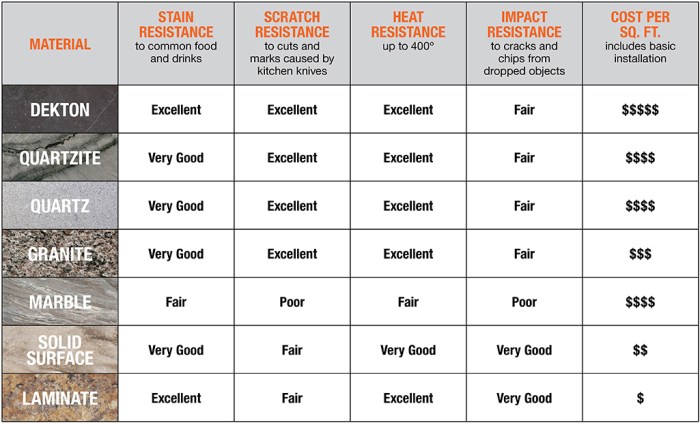
Ultimately, the best kitchen countertop material is the one that best suits
-your* individual needs and priorities. As we’ve explored through this kitchen countertop materials pros and cons comparison, each option offers a distinct blend of benefits and drawbacks. By carefully weighing these factors – considering your budget, lifestyle, and desired aesthetic – you can confidently choose a surface that will enhance both the beauty and functionality of your kitchen.
Remember to request samples, visit showrooms, and consult with professionals to gain a firsthand understanding of the materials. A well-chosen countertop is an investment that will provide lasting value and enjoyment, transforming your kitchen into the heart of your home.
General Inquiries
What is the most durable countertop material?
Quartz and granite are generally considered the most durable options, offering excellent resistance to scratches, heat, and stains. Stainless steel is also exceptionally durable, though prone to scratches.
How often do granite countertops need to be sealed?
Granite countertops typically need to be sealed annually, though the frequency can vary depending on the type of granite and the sealant used. A water bead test can help determine if resealing is necessary.
Can laminate countertops be repaired?
Minor scratches on laminate can sometimes be buffed out, but deeper damage is often irreparable. Replacement is usually the most practical solution for significant damage.
Are butcher block countertops sanitary for food preparation?
Yes, when properly maintained, butcher block countertops are very sanitary. The natural antibacterial properties of wood, combined with regular oiling and cleaning, make them a safe surface for food preparation.
What is the average lifespan of a quartz countertop?
With proper care, quartz countertops can last for 20-30 years or even longer, making them a very long-lasting investment.