Kitchen storage solutions for pots and pans are essential for a functional and enjoyable cooking experience. A cluttered cookware collection can quickly transform a well-designed kitchen into a frustrating space, hindering meal preparation and daily routines. Efficient storage isn’t just about aesthetics; it’s about maximizing space, protecting your investment in quality cookware, and streamlining your time in the kitchen.
This guide explores a comprehensive range of strategies, from optimizing cabinet and drawer space to utilizing hanging solutions and specialized organizers. We’ll delve into the specific needs of different cookware materials, address the challenges of small kitchens, and provide practical advice to help you create a system that works for your lifestyle and kitchen layout. Ultimately, the goal is to transform your cookware storage from a source of stress into a seamless part of your culinary journey.
Organizing Your Cookware: A Guide to Kitchen Harmony: Kitchen Storage Solutions For Pots And Pans
A well-organized kitchen is the heart of a happy home, and efficient cookware storage is a cornerstone of that organization. Too often, pots and pans become a chaotic jumble, making cooking a frustrating experience. This guide will walk you through practical solutions for storing your cookware, maximizing space, and protecting your investment.
Beyond the immediate convenience, proper cookware organization actually extends the lifespan of your pots and pans. Avoiding scratches, dents, and unnecessary banging around preserves their quality and performance. The ideal storage solution will also depend on your kitchen’s layout, so we’ll explore options for various spaces.
Introduction to Organizing Cookware
Many home cooks struggle with cookware storage. Common challenges include limited cabinet space, difficulty accessing frequently used items, and the sheer volume of pots, pans, and lids. Pots and pans often end up stacked haphazardly, leading to scratches and making it difficult to find the right piece when you need it. Lids are particularly problematic, often rolling around or getting lost in the shuffle.
Efficient cookware storage is crucial for kitchen functionality. It streamlines the cooking process, reduces stress, and makes your kitchen a more enjoyable space to be in. When everything has a designated place, meal preparation becomes faster and more efficient.
Proper organization also protects your investment in quality cookware. Scratches and dents can compromise the non-stick coating of pans, and improper stacking can cause warping. Taking the time to organize your cookware properly will save you money in the long run by extending its lifespan.
Kitchen layouts vary significantly. Galley kitchens, with their parallel countertops, often benefit from vertical storage solutions. L-shaped kitchens offer corner cabinet opportunities, while island kitchens can incorporate storage within the island itself. Understanding your kitchen’s layout is the first step in determining the best storage options.
Types of Pots and Pans & Their Storage Needs
Different cookware materials require different storage considerations. Understanding these nuances will help you choose the most appropriate storage methods. For example, cast iron needs to be protected from moisture, while non-stick cookware is susceptible to scratches.
The size and shape of cookware also influence storage solutions. Large stockpots require more space than small saucepans, and oddly shaped pans may need dedicated storage areas. Considering the dimensions of your cookware is essential when planning your organization system.
Here’s a breakdown of common cookware materials and their specific storage needs:
| Material | Special Considerations | Example Storage | Stacking Advice |
|---|---|---|---|
| Stainless Steel | Durable, can withstand high heat. Prone to scratching if not protected. | Cabinet shelves, drawer dividers with pan protectors. | Stack with pan protectors between each piece. |
| Cast Iron | Requires seasoning to prevent rust. Heavy and can damage surfaces. | Dedicated shelf, hanging pot rack. | Avoid stacking directly on top of each other; use layers of felt or cloth. |
| Non-Stick | Delicate coating easily scratched. Avoid metal utensils. | Drawer dividers with soft liners, hanging pot rack. | Stack with soft pan protectors; avoid nesting. |
| Copper | Conducts heat efficiently, requires polishing. Can be expensive. | Dedicated cabinet shelf, hanging pot rack. | Stack with soft cloth or felt between pieces. |
Lid storage is often the most challenging aspect of pot and pan organization. Lids can easily roll around and get lost. Dedicated lid organizers, or simply grouping lids with their corresponding pots, can help maintain order.
Cabinet Storage Solutions, Kitchen storage solutions for pots and pans
Source: cardinalkb.com
Adjustable shelves in cabinets offer flexibility, allowing you to customize the space to fit your cookware. However, they can sometimes feel flimsy or not provide enough support for heavier pots. The benefit is the ability to reconfigure as your cookware collection changes.
Maximizing vertical space within cabinets is key. Shelf risers create additional levels, allowing you to stack cookware more efficiently. Stackable organizers, designed specifically for pots and pans, can further enhance storage capacity. These organizers often feature dividers to prevent scratching.
Storing lids within cabinets requires a thoughtful approach. Lid organizers, available in various materials and designs, provide dedicated slots for each lid. Alternatively, you can create a system of stacking lids vertically, using a tension rod or dividers to keep them in place.
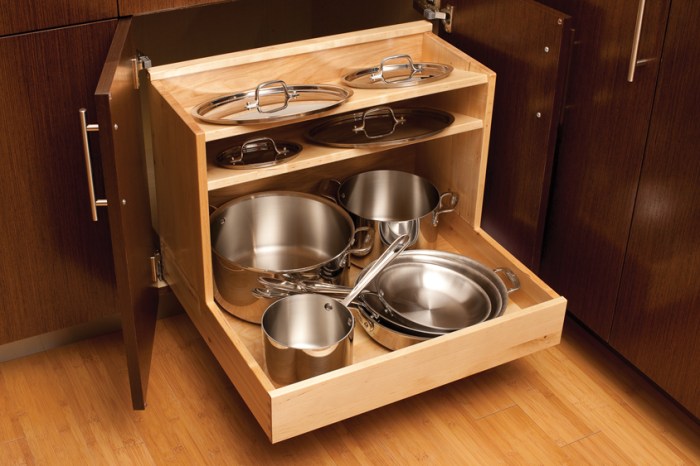
Building a pull-out pot and pan organizer for lower cabinets is a fantastic way to improve accessibility. These organizers typically consist of a series of sliding shelves that allow you to easily view and retrieve your cookware. You can purchase pre-made organizers or build your own using plywood and drawer slides.
Drawer Storage Options
Drawer dividers are essential for keeping cookware organized and preventing it from shifting around. Wood dividers offer a classic look and are very durable, but can be more expensive. Plastic dividers are affordable and easy to clean, but may not be as sturdy. Bamboo dividers provide a sustainable and aesthetically pleasing option.
Creating custom drawer dividers allows you to tailor the storage space to your specific cookware dimensions. Measure the length, width, and height of each pot and pan, then cut the dividers accordingly. This ensures a snug fit and maximizes space utilization.
Implementing a tiered drawer system can further enhance efficiency. Place frequently used items in the top drawer, and less frequently used items in lower drawers. This allows for quick and easy access to your most essential cookware.
Here’s a list of essential tools for measuring and cutting drawer dividers:
- Measuring tape
- Pencil
- Saw (hand saw or power saw)
- Sandpaper
- Wood glue (if using wood dividers)
- Clamps (if using wood dividers)
Hanging Storage Alternatives
Using pot racks for frequently used cookware offers easy access and frees up valuable cabinet space. It also adds a decorative element to your kitchen. However, it’s important to ensure the pot rack is securely mounted and can support the weight of your cookware.
There are several types of pot racks to choose from. Ceiling-mounted pot racks are ideal for kitchens with high ceilings. Wall-mounted pot racks are a good option for smaller kitchens. Island-mounted pot racks provide convenient access from multiple directions. The best choice depends on your kitchen’s layout and your personal preferences.
Safely installing a ceiling-mounted pot rack requires careful planning and execution. Ensure the ceiling joists are strong enough to support the weight of the rack and cookware. Use appropriate mounting hardware and follow the manufacturer’s instructions carefully. Consider professional installation if you’re not comfortable with DIY projects.
A rustic, wooden pot rack with S-hooks can add charm to any kitchen. The rack can be constructed from reclaimed wood, giving it a unique and characterful appearance. S-hooks, made from wrought iron or stainless steel, provide a secure and convenient way to hang pots and pans. The wood should be sanded and sealed to protect it from moisture and wear.
Utilizing Wall Space
Installing magnetic knife strips for pot lids is a clever way to keep them organized and within reach. The magnetic strips securely hold the lids in place, preventing them from rolling around or getting lost. Ensure the strips are mounted securely to the wall.
Pegboards are incredibly versatile and can be used to hang pots, pans, and utensils. The modular design allows you to customize the layout to fit your specific needs. Use a variety of hooks and accessories to create a functional and visually appealing storage system.
A wall-mounted shelving unit specifically for cookware can provide ample storage space without taking up valuable floor space. Consider the weight capacity of the shelves and choose a design that complements your kitchen’s aesthetic. Securely mount the shelves to the wall using appropriate hardware.
Here’s a comparison of different wall-mounted shelving options:
| Shelf Type | Material | Weight Limit | Aesthetic Style |
|---|---|---|---|
| Floating Shelves | Wood, Metal | 20-50 lbs | Modern, Minimalist |
| Bracket Shelves | Wood, Metal | 30-75 lbs | Rustic, Traditional |
| Corner Shelves | Wood, Metal | 15-40 lbs | Space-Saving, Functional |
Pantry & Island Storage
Source: thecreativekitchenco.com
Storing less frequently used cookware in a pantry is a practical way to free up space in your main kitchen area. Designate a specific shelf or section of the pantry for pots and pans that you only use occasionally, such as holiday cookware or specialty items.
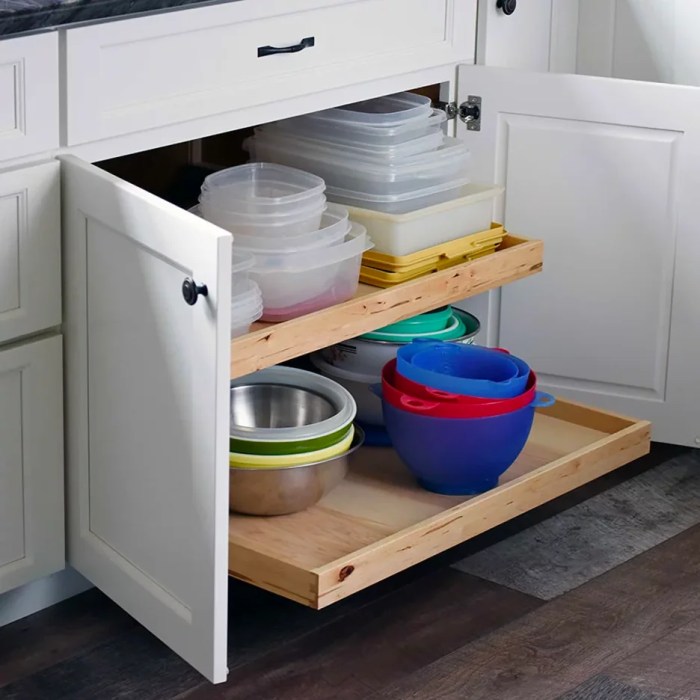
Incorporating pot and pan storage into kitchen island designs can significantly enhance functionality. Pull-out shelving systems, deep drawers, and dedicated cabinets within the island provide convenient access to cookware.
Pull-out shelving systems for kitchen islands make it easy to retrieve pots and pans without having to bend or reach. These systems typically consist of a series of sliding shelves that extend outward, providing full visibility of the contents.
Deep drawers within a kitchen island are ideal for storing large pots and pans. The ample space allows you to organize cookware efficiently and prevent it from becoming cluttered. Use drawer dividers to keep everything in its place.
Specialized Storage Products
Innovative cookware organizers are available on the market to address specific storage challenges. Pan protectors prevent scratches, lid organizers keep lids neatly stacked, and vertical pan organizers maximize vertical space. These products can significantly improve the organization of your cookware.
Pan protector brands vary in terms of features and price points. Some protectors are made from soft fabric, while others are made from durable plastic. Consider your budget and the level of protection you need when choosing a pan protector.
Assembling and using a vertical pan organizer is typically straightforward. The organizer consists of a series of adjustable dividers that allow you to customize the space to fit your cookware. Simply insert the dividers into the slots and arrange your pots and pans accordingly.
Here’s a list of features to look for when purchasing a cookware organizer:
- Adjustability
- Durability
- Ease of cleaning
- Space-saving design
- Compatibility with your cookware
Storage for Cast Iron Cookware
Cast iron cookware requires specific storage to prevent rust. Moisture is the enemy of cast iron, so it’s essential to keep it dry. Avoid storing cast iron cookware in damp environments.
Seasoning cast iron cookware is crucial for protecting it from rust and maintaining its non-stick properties. After each use, clean the pan thoroughly and apply a thin layer of oil. Heating the pan in the oven for an hour will help to polymerize the oil and create a durable seasoning.
Protecting the seasoning of cast iron during storage involves avoiding moisture and preventing the pan from coming into contact with abrasive materials. Place a paper towel or cloth between cast iron pans when stacking them. Avoid using soap when cleaning cast iron cookware.
Proper airflow is essential when storing cast iron. Avoid tightly wrapping the pan, as this can trap moisture and lead to rust. Allowing air to circulate around the pan will help to keep it dry and prevent corrosion.
Optimizing Small Kitchens
Source: houszed.com
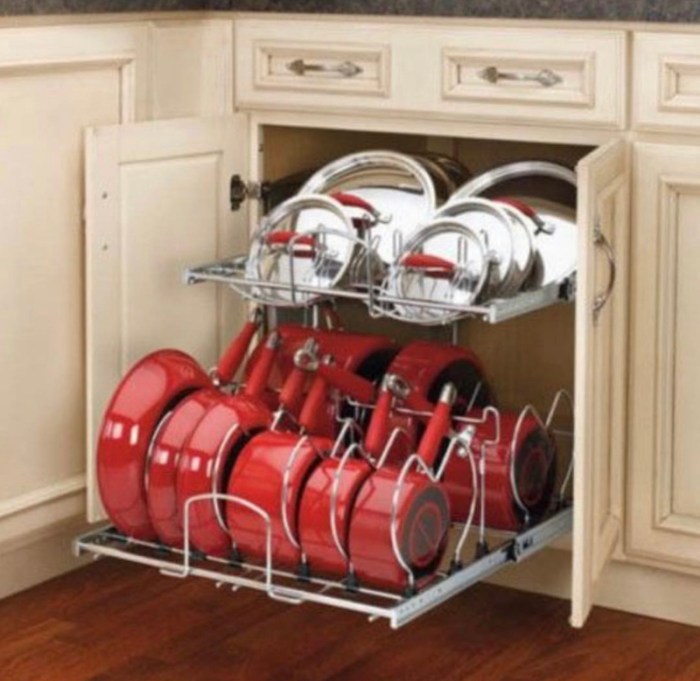
Space-saving storage solutions are essential for compact kitchens. Utilizing vertical space, maximizing corner cabinets, and incorporating multi-functional storage solutions can significantly improve organization.
Corner cabinets can be challenging to utilize effectively, but there are several solutions available. Lazy Susans, pull-out shelves, and angled dividers can help you access items stored in the back of the cabinet. Consider a corner cabinet organizer specifically designed for pots and pans.
Multi-functional storage solutions, such as a rolling cart that can be used for cookware and food preparation, can save valuable space. The cart can be moved around the kitchen as needed, providing a flexible and convenient storage option.
Here’s a table outlining storage solutions for small kitchens:
| Space | Solution | Cost | Difficulty |
|---|---|---|---|
| Corner Cabinets | Lazy Susan | $20-50 | Easy |
| Under Sink | Pull-Out Organizer | $30-80 | Medium |
| Wall Space | Magnetic Knife Strip (for lids) | $15-30 | Easy |
| Limited Floor Space | Rolling Cart | $50-150 | Easy |
Ultimate Conclusion
In conclusion, achieving effective kitchen storage solutions for pots and pans requires a thoughtful approach tailored to your specific needs and kitchen space. By considering the materials of your cookware, maximizing vertical space, and embracing innovative organizers, you can create a system that is both functional and aesthetically pleasing. Remember that the best solution is one that simplifies your cooking process and protects your valuable cookware for years to come.
Don’t hesitate to experiment with different techniques and products to find what works best for you. A well-organized kitchen not only enhances your cooking experience but also contributes to a more peaceful and efficient home environment. Prioritizing smart storage is an investment in your daily life and a step towards a more enjoyable culinary experience.
Expert Answers
What is the best way to store lids?
Lid organizers are highly effective. Alternatively, magnetic knife strips can hold lids securely on a wall or inside a cabinet door. Consider the size and quantity of lids when choosing a solution.
How can I prevent cast iron from rusting during storage?
Ensure cast iron is completely dry before storing. A light coating of oil after drying helps prevent rust. Avoid airtight containers and allow for airflow.
Are plastic drawer dividers durable enough for heavy pots and pans?
While convenient, plastic dividers may not be strong enough for very heavy cookware. Wood or bamboo dividers offer greater support and durability.
What’s the best height for a ceiling-mounted pot rack?
A height of 7-9 feet is generally recommended to provide ample headroom while still allowing easy access to the cookware.
How do I clean and maintain a wooden pot rack?
Regularly dust the rack with a soft cloth. For deeper cleaning, use a mild soap and water solution, ensuring the wood is thoroughly dried afterward. Consider applying a food-safe wood sealant periodically to protect the finish.